Saturday, October 19
Another leisurely morning feeling well-rested and ready for the day. Lucy took care of us this morning, with warm, fresh “pain au chocolat” (croissants with chocolate filling), and a pot of tea. Unlike yesterday, the weather is beautiful—clear, crisp, a refreshing 58 degrees. We ventured into downtown Holywood this morning for some shopping.
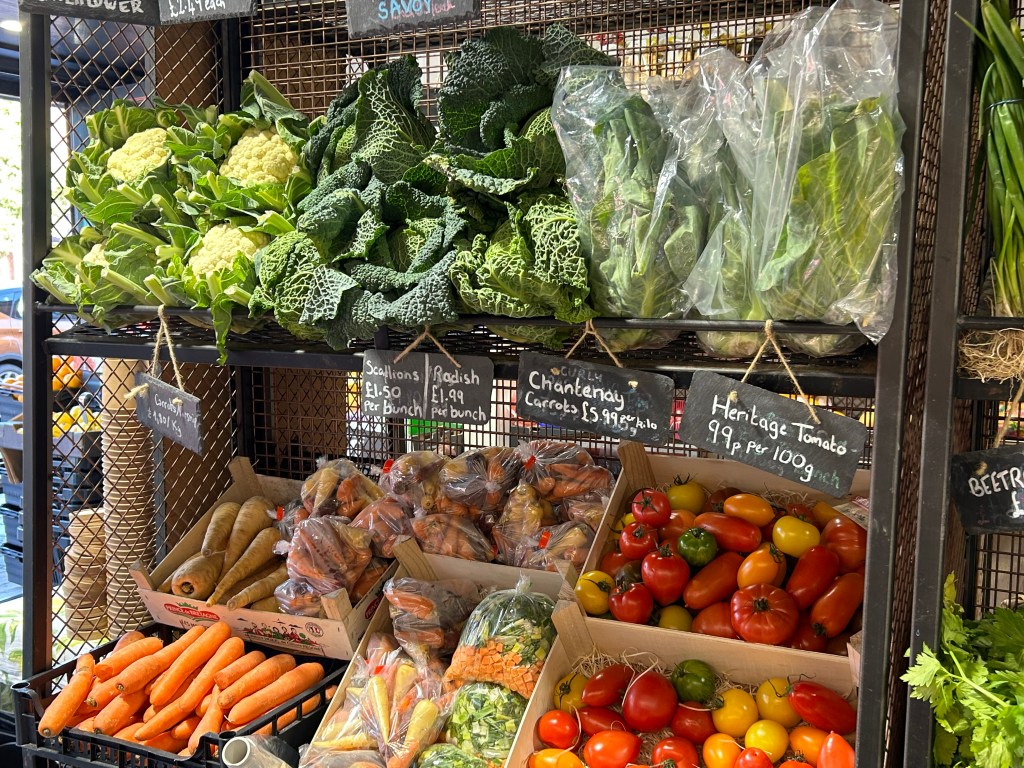
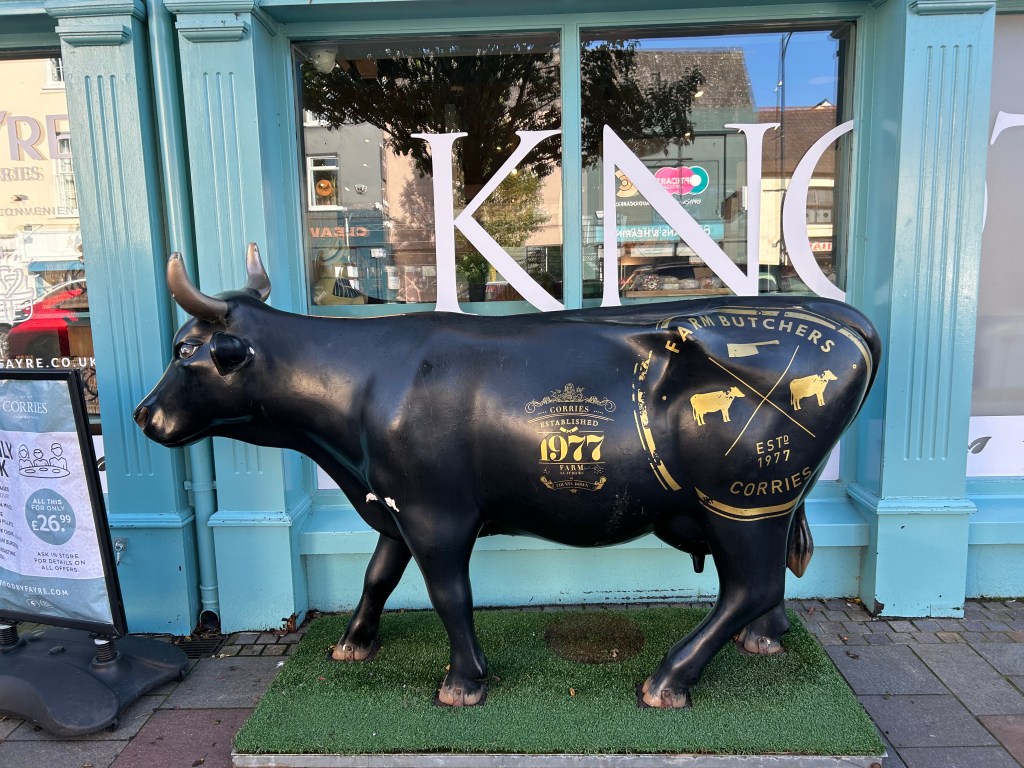
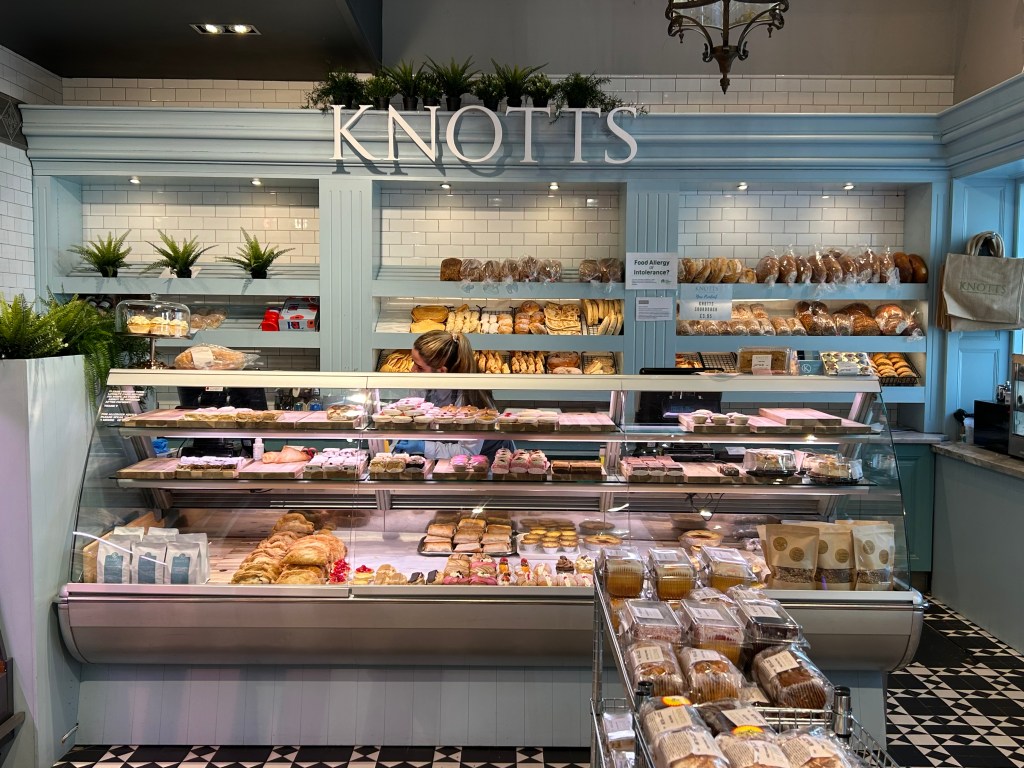
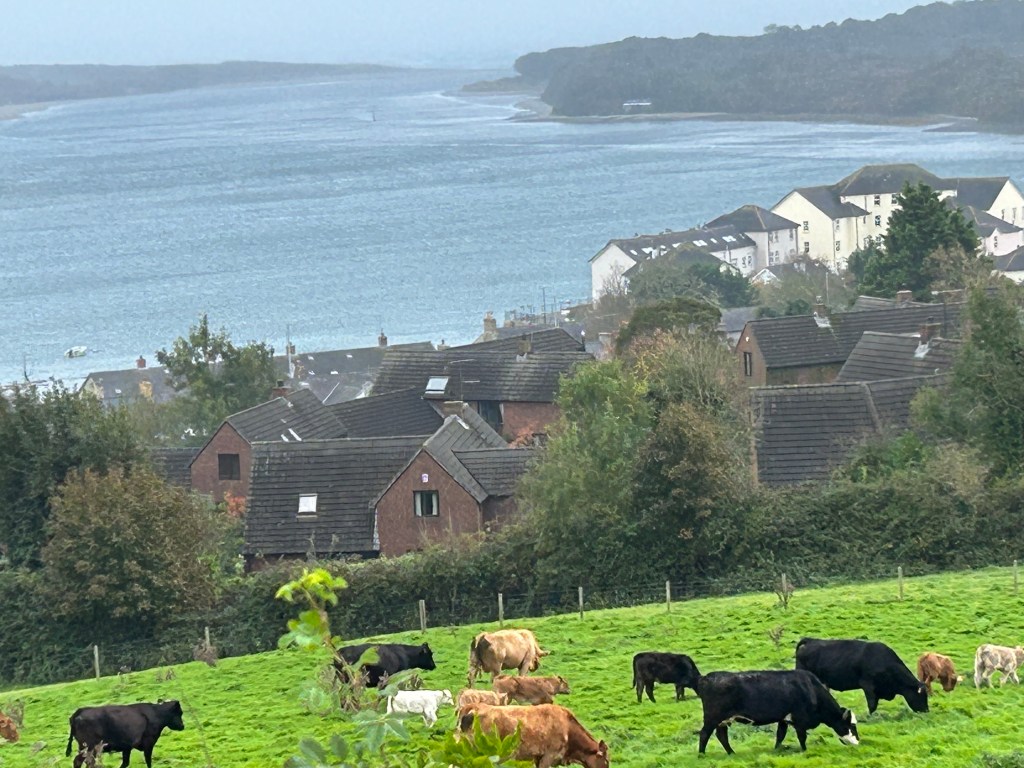
Holywood is a lovely town, really a small city, not too different in size from Auburn but with many more retail shops. The main shopping street slopes downhill to the “lough” (bay). There were green grocers, bakeries, butcher shops, a re-use shop, clothing boutiques, jewelers, and numerous “charity” (thrift) shops. It was interesting to see the food establishments right next to clothing and jewelry stores. Alison was greeted warmly at each establishment, often by name. Since each food shop was specialized, the goods were exquisite—fresh, homemade, natural. We got homemade granola, a loaf of fresh grain bread, croissants, meat, cheese, and more for our trip to Donegal.
Our lunch at home was a spread of fresh bread, ham, and 4 types of cheese just purchased at the cheese shop. Perfect for filling our tummies before our afternoon pub crawl.
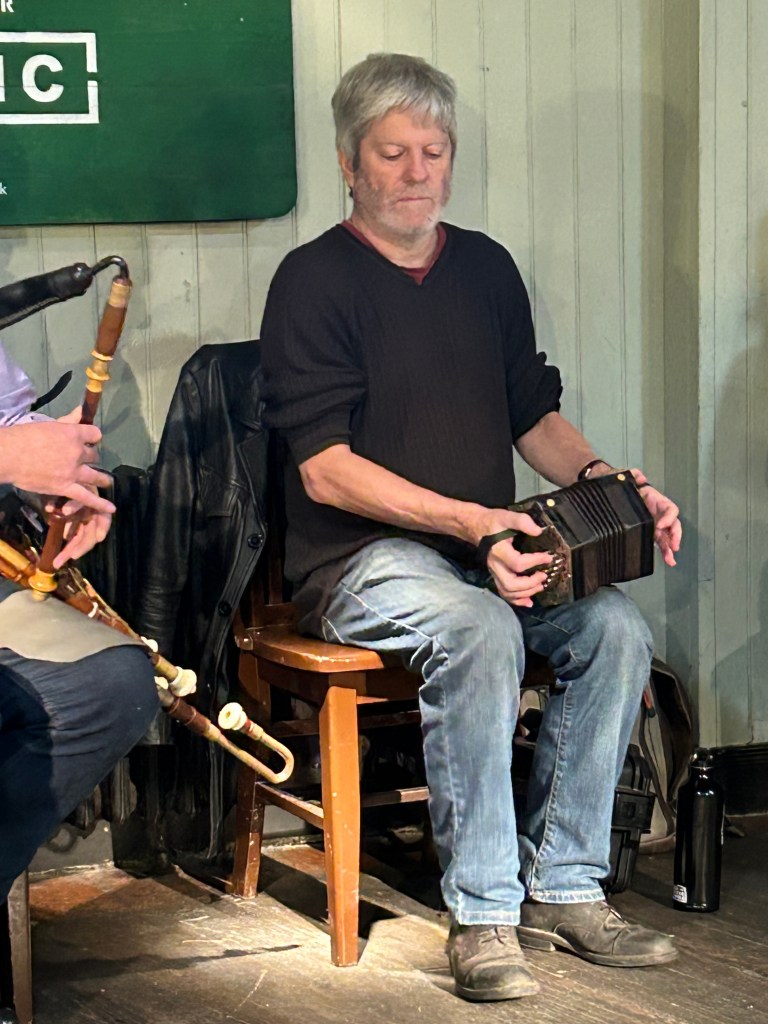
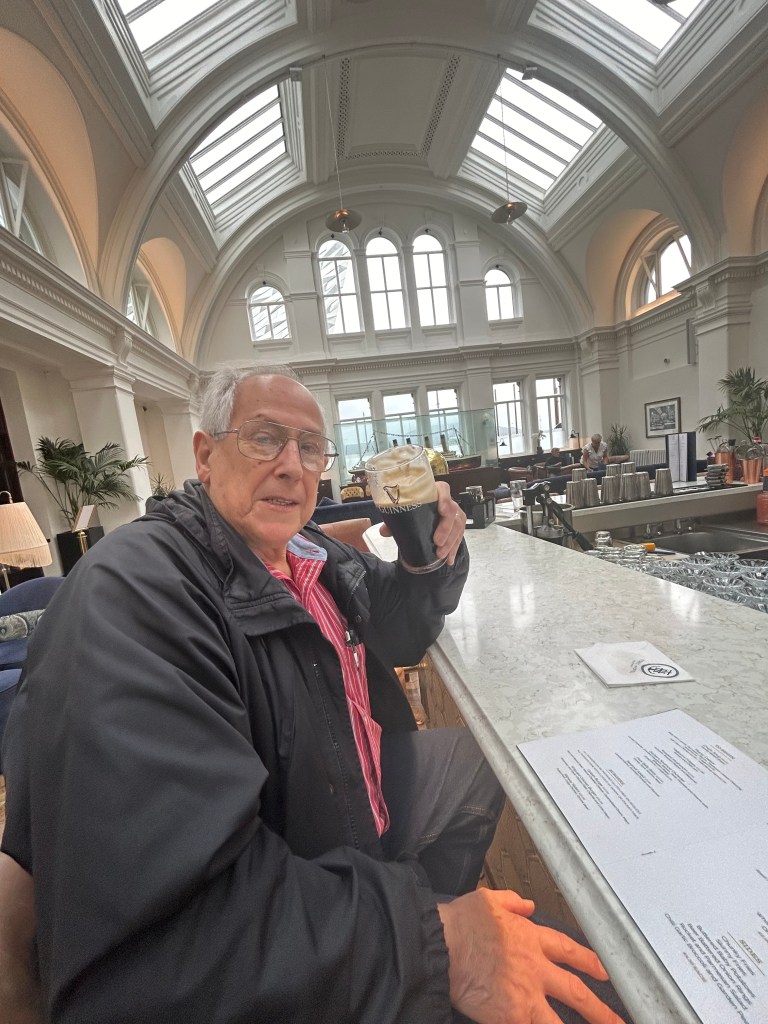
Alison, Santo, and I went to downtown Belfast for a special Irish music pub crawl hosted by two local musicians. We met at one pub, where we enjoyed, along with our Guinnesses, traditional music on the Uilleann pipes and concertina. Between sets, the musicians provided information about the instruments and told us how a typical Irish sessions works. They are not jam sessions, as you would think of for jazz performances. Rather, all Irish musicans have stored over a thousand tunes (jig, reels, and slip-jigs) in their heads! One musician leads the session, and the others follow his lead as to what tune will be played next, cuing each other with a nod of the head or subtle smile. The tunes are played in sets of 3 or 4. We learned about the different rhythms: 4-4 time, the 4 beats counted by the mnemonic “Black & Decker;” 6-8 time with the mnemonic “carrots ‘n cabbages;” and 9-8 time with the mnemonic “carrots ‘n cabbages radishes.” The audience was challenged to guess the rhythms after hearing a few tunes, but the play was so fast that it was surprisingly hard to do.
The Uilleann pipes are one of the most sophisticated instruments in the world, much more so than the more familiar Scottish bagpipes. The bag sits under the players left elbow, and he pumps it by lifting his arm then squeezing with his elbow. There are stops on a large pipe leading from the bag, where there is also a button for turning the drone on and off (something not possible on the Scottish bagpipes). In addition, the piper plays a flute-like instrument with his mouth and fingers, pumping another bag under his other arm. It is incredibly complex and as you listen it seems impossible that all the rich sounds produced are being played by one person.
The concertina was a beautiful instrument with black and silver hand plates and leather bellows with a gold design. It is octagonal in shape, and the musician played it rested on his knee, though he told us this was not the way it was supposed to be played and he was often scolded by other concertina players. The concertina played the melody in long, haunting notes, with accompanying chords humming underneath. This particular instrument was 125 years old and insured for 10,000 pounds.
After about one and a half hours, we did our “crawl” to the next venue, another downtown Belfast pub. Along the way, our guides stopped at several sites important to the musical history of Ireland. We walked through the first floor of the pub on our way to the lower room. The place was hopping, people of all ages, sitting or standing, beers or Guinnesses in hand. In the back room, an actual session was taking place. The downstairs room was reserved for us. Our guides took their seats at the front of the room, where they were joined by a girl in a black ballet top and short skirt over black stockings. Our dancer.
After explaining a bit about how the dancers and musicians worked together, take cues from one another, she demonstrated several dances, arms tight to her sides, feet moving faster than seemed possible, legs kicking fast and high. The she got four volunteers from the audience to join her and taught them a simple dance, which they then performed quite ably.
When our guides announced that we were near the end of the tour, I felt a tinge of disappointment. I relished every moment of their final set. On our way out, we stopped upstairs at the session which included about six musicians, all male, around a long table at the back of the pub. There were violins, Uilleann pipes, guitar, and flute. I loved watching the eye contact among the players and the movements of their fingers as they played, all one with the rapid rhythms of the music.
We arrived home sometime after 6 pm. Alison and Lucy quickly prepared a meal of roasted pork chops, mashed potatoes, and green beans. I don’t know how they do it all in their tiny kitchen. The room is so small, one narrow aisle down the middle, that it is hard to help. On top of that, there are stockpiles of food in preparation for our week-long trip to Donegal filling up the kitchen table. There just isn’t room for any more bodies and no free surface to work.
So once again we are served a magnificent meal, having done nothing to help prepare it. The pork chops are delicious—roasted then topped with applesauce and blue cheese and placed under the grill til the cheese melts. Three votive candles in the middle of the table create the familiar warm atmosphere of our home away from home. We enjoyed our meal, more stories, and laughter.
We ended the night in the living room, first watching a political satire program, Have I Got News for You, on BBC 1, which included some pointed barbs about Trump that really hit the mark, then a few episodes of Father Ted, a 1990s sitcom about 3 priests on a remote Irish island that is so silly and over-the-top that it is surprisingly hysterical.
Another full day of enjoying Ireland, enjoying our dear friends, who are getting dearer every day, and basking in the warmth that surrounds us.








 Rambling Rose